Many construction firms in Derby assume a visual inspection of clay samples is enough to estimate undrained shear strength. That assumption can lead to over-designed foundations or, worse, settlement failures. The unconfined compression test (UCS) provides a direct, repeatable measurement of shear strength on undisturbed cohesive specimens. Without it, engineers rely on correlations that may not reflect the actual material behaviour. Before committing to a foundation design on Derby's glacial till or river terrace deposits, this test removes guesswork. It also complements a full classification of soils to confirm the material is correctly identified.
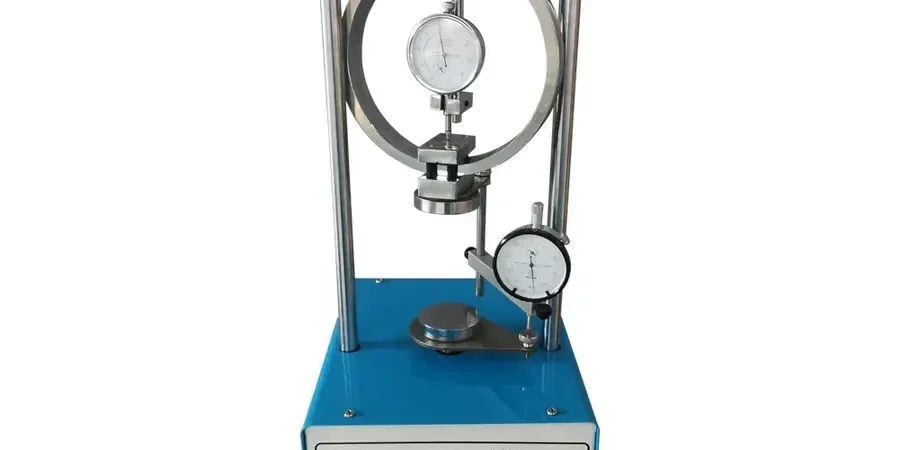
A single UCS result on Derby's glacial till can prevent an entire foundation redesign. Direct strength data beats any correlation.
Process overview
Local context
Derby sits on a varied geological sequence: Mercia Mudstone, glacial till, river terrace sands and alluvial clays. The unconfined compression test (UCS) is particularly sensitive to sample disturbance. If the tube sampler is advanced too fast or the core is allowed to dry before testing, the measured strength can be 30-50% lower than the in-situ value. That leads to over-conservative designs and wasted material. Conversely, testing a desiccated crust from the Derwent floodplain without accounting for moisture loss gives false high strength. Proper handling and rapid testing are critical. Missing this step can delay a piling contract by weeks.
Visual overview
Regulatory framework
BS 1377-7:1990 – Methods of test for soils: Shear strength (unconfined compression), BS 5930:2015 + A1:2020 – Code of practice for ground investigations, Eurocode 7 (EN 1997-2:2007) – Geotechnical design, ground investigation and testing
Additional services
Standard UCS on U100 samples
Test on undisturbed tube samples from boreholes. Quick turnaround: 5 working days. Includes moisture content and bulk density.
Block sample UCS
For stiff clays or till where tube recovery is poor. Hand-carved blocks trimmed to size. Ideal for Derby's glacial till deposits.
Multi-stage UCS
Multiple specimens from the same core at different depths. Provides a strength profile without extra borehole cost.
UCS with stress-strain curve
Full axial stress-strain recording. Gives Young's modulus (Eu) for settlement analysis. Useful for raft foundations on alluvium.
Typical parameters
Questions and answers
What is the difference between UCS and triaxial test on Derby soils?
UCS applies no confining pressure, so it measures the intact strength of cohesive soil in its natural state. Triaxial tests apply a confining stress to simulate burial depth. For Derby's near-surface glacial till and alluvium, UCS is faster and cheaper; triaxial is used when the soil will be loaded under confinement (e.g. deep foundations).
How much does an unconfined compression test cost in Derby?
A standard UCS on a U100 sample typically costs between £290 and £470, depending on quantity and whether moisture content is included. Block samples and multi-stage tests are quoted individually. Contact us for a project-specific price.
What sample quality is needed for a reliable UCS result?
The sample must be undisturbed and kept at natural moisture content. The height-to-diameter ratio should be 2.0-2.5, and the ends must be parallel within 0.05 mm. Any cracks, drying, or remoulding will invalidate the result. We reject samples that show handling damage.
Can UCS be used on Derby's sandy soils?
No. UCS is only valid for cohesive soils (clay, silt, till) that can stand unsupported. For Derby's river terrace sands or gravels, we recommend direct shear or triaxial testing instead. The sample would collapse under its own weight before loading.