Derby sits on a mix of river terrace deposits and Mercia Mudstone, with the River Derwent cutting through the city centre. Groundwater levels vary significantly between the alluvial floodplain and the higher sandstone ridges. For any excavation or retaining structure, anchor design must account for these contrasts. We have designed anchors for temporary works in Derby city centre, where close proximity to historic buildings demanded strict displacement limits. Before starting anchor calculations, we often run a permeability test to understand drainage behaviour in the mudstone layers. Active anchors work best when the ground can take preload without creeping, while passive anchors suit situations where movement is acceptable after loading. Each project in Derby requires a tailored balance between bond length, grout pressure, and corrosion protection.
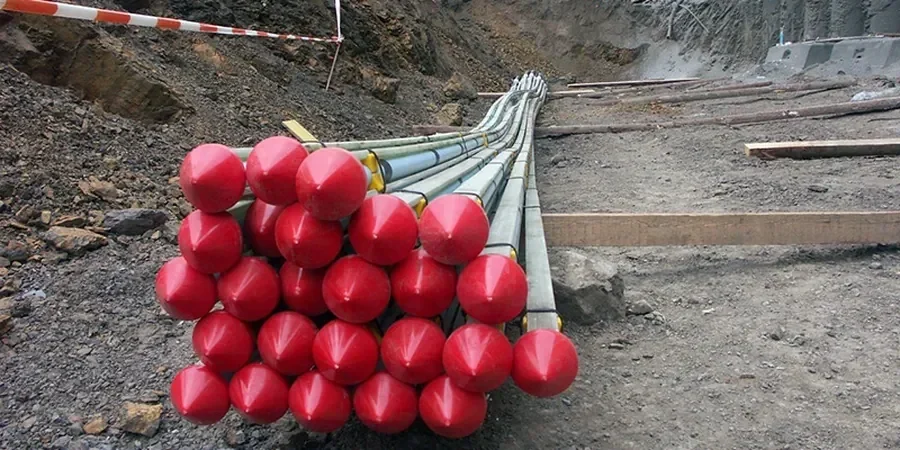
Anchor load tests in Derby's Mercia Mudstone show bond stresses between 80 and 180 kPa, confirming the need for site-specific design rather than generic tables.
Process overview
Local context
Derby's seasonal rainfall, averaging 700 mm per year, saturates the upper soil layers from October to March. This reduces effective stress in the bond zone of passive anchors significantly. If you tension an active anchor during a wet period and the water table drops later, you can lose up to 20% of the preload within the first year. We mitigate this by designing with a safety margin on the bond length and by specifying sacrificial corrosion coupons for long-term monitoring. Another risk comes from the variable thickness of the alluvium; we have seen 6 m of soft clay overlying mudstone in the same borehole. Ignoring that transition zone can lead to bond failure at the soil–rock interface. A thorough ground investigation is non-negotiable.
Regulatory framework
BS EN 1997-1:2004 (Eurocode 7 – Geotechnical design), BS EN 1537:2013 (Execution of ground anchor works), BS 8081:2011 (Code of practice for ground anchorages), CIRIA C760 (Guidance on embedded retaining walls)
Additional services
Active Anchor Design for Retaining Structures
We design pre-stressed ground anchors for secant pile walls, sheet piles, and contiguous bored piles in Derby. Our calculations follow BS 8081 and include lock-off loads, creep analysis, and group effects. We specify test anchors to verify bond capacity before production.
Passive Anchor Design for Slope Stabilisation
For natural slopes and embankments in Derby, we design passive soil nails and untensioned anchors. These rely on mobilised shear resistance and are ideal for cuttings in weathered mudstone. We calculate pull-out resistance using local soil parameters from site investigation data.
This service complements our laboratory testing work for a complete project analysis.
Typical parameters
Questions and answers
What is the difference between active and passive anchors in Derby's ground conditions?
Active anchors are pre-stressed to a specified load immediately after grouting, which compresses the ground and prevents movement. Passive anchors are not pre-stressed; they only resist load when the ground moves. In Derby's Mercia Mudstone, active anchors are preferred for retaining walls where displacement must be minimised, while passive anchors suit slope stabilisation where some movement is tolerable.
How much does anchor design and testing cost in Derby?
A typical anchor design package with verification testing for a small retaining wall in Derby costs between £890 and £2,660. This includes bond length calculations, corrosion protection specification, and on-site pull-out tests. Costs vary with anchor length, number of anchors, and site access constraints.
What corrosion protection is required for permanent anchors in Derby?
Permanent anchors in Derby must meet Class 2 double-corrosion protection under BS EN 1537. This involves a greased and sheathed free length plus a grout-filled corrugated duct over the bond length. For aggressive ground conditions near the Derwent floodplain, we also recommend sacrificial coupons for long-term monitoring.
Can anchors be installed in Derby's alluvial soils?
Yes, but with caution. The soft alluvium near the River Derwent has low shear strength, so the bond zone must extend into the underlying Mercia Mudstone or river terrace gravels. We calculate the required bond length based on site-specific soil parameters and always perform a preliminary test anchor to confirm capacity before production.