We deploy the field vane shear test (VST) using a standard four-bladed vane (H 75 mm, D 38 mm) pushed into Derby’s soft alluvial clays and peat deposits. The equipment measures torque at a controlled rotation rate of 6° per minute, giving direct readings of undrained shear strength (su) without sample disturbance. For cohesive soils near the Derwent floodplain, this vane shear test bypasses the handling issues that affect block samples, and it pairs naturally with a dilatometer test to cross-check stiffness parameters in the same borehole.
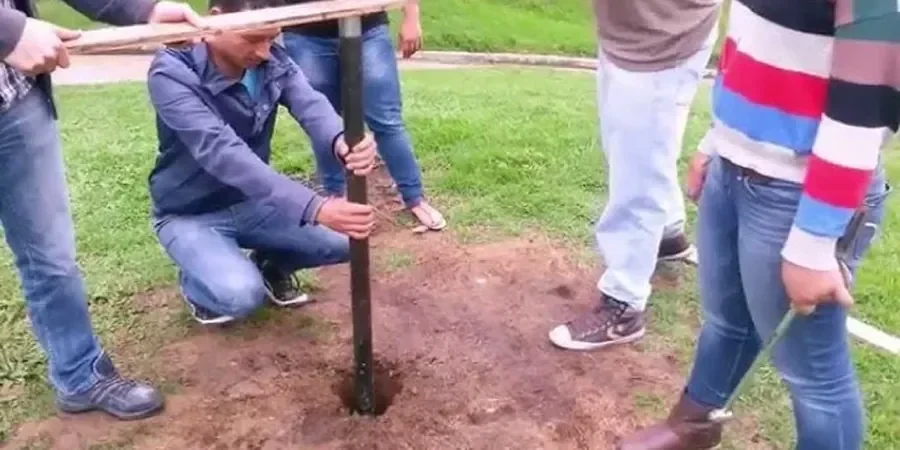
In Derby’s soft alluvium, the vane shear test delivers undrained strength data that no laboratory test can replicate for remoulded conditions.
Process overview
Local context
Derby’s geology combines glacial till with thick river terrace deposits and pockets of compressible peat. During wet winters, the water table can rise within 1 m of the surface, softening the upper clays. If you rely only on laboratory triaxial data from disturbed samples, you risk overestimating su by 25–40 %. Running a field vane shear test at multiple depths on the same day avoids that error and gives you the real remoulded strength needed for slope stability checks.
Regulatory framework
BS 1377-9:1990 – Methods for in-situ vane shear test, BS 5930:2015 – Code of practice for ground investigations, Eurocode 7 (EN 1997-1:2004) – Geotechnical design
Additional services
Multi-depth VST profiling
Continuous vane shear tests at 0.5 m intervals within the same borehole, providing a detailed su profile through Derby’s layered clays and peat.
Remoulded strength testing
After peak failure, we rotate the vane rapidly for 10 full turns and record the remoulded strength – essential for calculating sensitivity and assessing liquefaction potential in soft soils.
VST with pore pressure monitoring
We install a miniature piezometer behind the vane rod to track pore pressure dissipation during the test, giving insight into consolidation behaviour of Derby’s low-permeability clays.
Typical parameters
Questions and answers
At what depth range can the field vane shear test be performed in Derby?
In Derby we typically test from 0.5 m down to 25 m depth using standard drill rods. For deeper soft clays, we extend with casing to prevent borehole collapse in the granular layers above.
How does the vane shear test compare to a triaxial test on Derby clays?
The VST measures undrained strength directly in situ without sample disturbance. In Derby’s sensitive peat and clay sequences, triaxial tests on block samples often overestimate su by 15–30% due to stress relief and sample handling. The VST gives you the real peak and remoulded values.
What is the typical cost for a field vane shear test in Derby?
A standard VST at one depth point, including mobilisation and reporting, ranges between £500 and £990. Multi-depth profiling or combined works (e.g. with SPT) are quoted based on total borehole length and access conditions.