Derby’s growth as a railway and industrial hub in the 19th century shaped its urban layout, with many roads built over former floodplains of the River Derwent. That legacy means today’s road embankment design in Derby must account for soft alluvial clays and variable terrace gravels. The Derwent’s seasonal flooding left layers of organic silt, which can settle unevenly under fill. Before any embankment goes in, we run a thorough ground investigation to map those pockets. For fills adjacent to existing structures, we often combine this with a stability analysis to confirm the slope won’t creep over time.
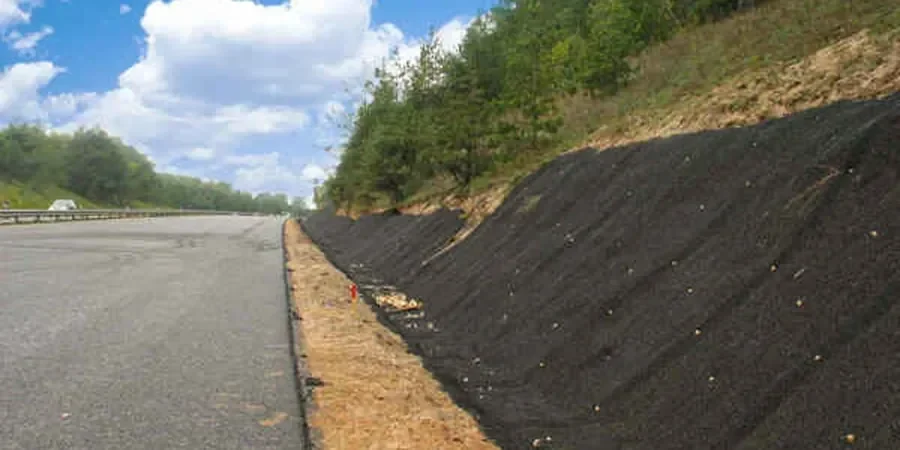
On the alluvium near the Derwent, groundwater can sit less than a metre below surface, requiring staged fill placement to avoid bearing failures.
Process overview
- Undrained shear strength of foundation soils (from triaxial or vane tests)
- Compressibility index Cc for settlement estimates
- Groundwater level, which can sit less than 1 m below surface near the Derwent
- Optimum moisture content from Proctor compaction (BS 1377)
Local context
Derby sits in a temperate zone with annual rainfall around 700 mm, but the real risk comes from the Derwent’s flash floods after heavy storms. Saturated foundation soils lose shear strength fast. A road embankment design in Derby that ignores pore‑pressure build‑up can suffer rotational slips or excessive consolidation settlement. We always model the worst‑case winter water table using piezometer data. The other common issue is differential settlement where the embankment crosses from firm terrace gravel into soft alluvium — that transition needs a gradual load transfer, often with a geotextile reinforcement layer at the base of the fill.
Visual overview
Regulatory framework
BS 6031:2009 – Code of practice for earthworks, BS EN 1997‑1:2004 (Eurocode 7) – Geotechnical design, Highways England Manual of Contract Documents (MCHW) Series 600, BS 1377:1990 – Methods of test for soils for civil engineering purposes
Additional services
Ground investigation for embankments
Boreholes, trial pits, and in‑situ testing (SPT, vane shear, plate load) to profile the foundation soils and locate the water table. We follow BS 5930 and Eurocode 7 for sampling and classification.
Settlement and stability analysis
Finite‑element modelling using PLAXIS or Oasys to predict long‑term settlement under fill loads. We run undrained and drained slope stability checks (Bishop’s method, Morgenstern‑Price) to satisfy UK design standards.
Typical parameters
Questions and answers
What is the typical cost range for a road embankment design study in Derby?
For a standard highway embankment up to 5 m high on alluvial ground, the geotechnical investigation and design package typically falls between £1.070 and £3.100, depending on the number of boreholes, laboratory tests, and complexity of the slope analysis.
How deep should boreholes be for embankment design on Derby's floodplain?
Boreholes should extend at least 1.5 times the embankment height below the base of the fill, or until firm stratum is confirmed. On Derby's alluvium, that often means 8–12 m depth to reach the underlying Keuper Marl or terrace gravels.
Can lightweight fill reduce settlement on soft ground in Derby?
Yes. Expanded clay aggregate or foamed concrete can lower the vertical stress on soft alluvium by 30–50 % compared with conventional granular fill. This approach is common near the Derwent where undrained shear strengths are below 30 kPa.