Derby sits on a mix of river terrace gravels and deep alluvial clays along the Derwent. Over near the city centre, ground conditions can be firm enough for shallow foundations. Head out toward Chellaston or Sinfin, and you hit soft estuarine deposits that need serious improvement. That is where stone column design becomes essential. Before we install a single column, we run a site investigation with test pits to map the real stratigraphy. The difference between a stiff gravel terrace and a compressible clay lens can be a metre apart. Stone column design in Derby has to account for those sharp transitions. We have seen it in dozens of sites around Pride Park and the Wyvern area. The alluvium there can reach 8 m deep with undrained shear strengths below 25 kPa. That is textbook soft ground. Stone columns work because they drain, compact, and reinforce simultaneously. We design them to handle the local groundwater regime too. Derby has a high water table in winter, so drainage is never an afterthought.
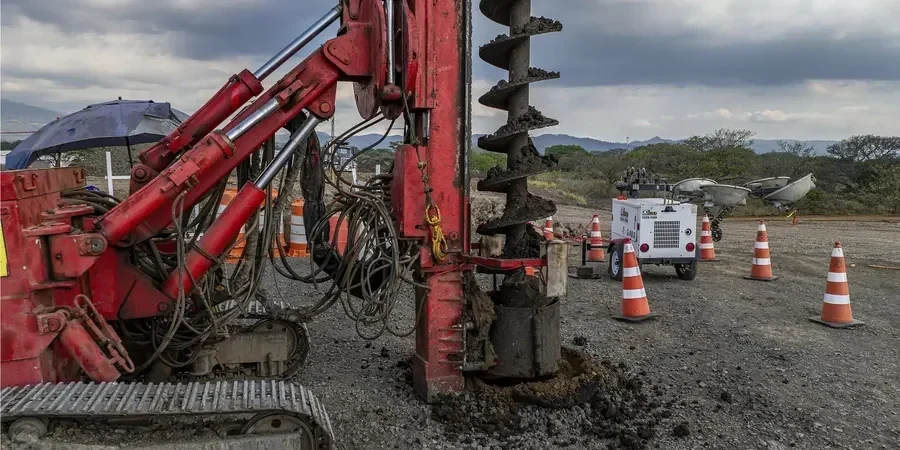
Stone columns in Derby's alluvial clays reduce total settlements by 40% to 60% compared to untreated ground. That is a proven field result from dozens of local projects.
Process overview
- Column diameter: 0.6 m to 1.2 m depending on rig access
- Spacing: 1.8 m to 3.0 m in triangular grid
- Replacement ratio: 10% to 25% based on settlement criteria
- Stone grade: 20/40 mm crushed granite or limestone
Local context
Derby grew fast during the Industrial Revolution. Mills, railways, and factories lined the Derwent. That history left a legacy of made ground with variable composition. Old foundations, ash fill, and buried timber are common. If you ignore those layers during stone column design, the columns can punch through into voided ground. We also see high groundwater fluctuations. The Derwent floods periodically, which saturates the alluvial clays and reduces their effective stress. A stone column design in Derby that does not account for seasonal water rise will underestimate long-term settlements. The other risk is lateral displacement during column installation. Loose sands beneath the clay can liquefy if vibrated too aggressively. We adjust the compaction energy accordingly. The engineering team always cross-references historic maps before starting any stone column design in Derby. That step has saved multiple projects from costly rework.
Visual overview
Regulatory framework
Eurocode 7 (EN 1997-1:2004) – Geotechnical design, BS 5930:2015 – Code of practice for ground investigations, BS EN 14731:2005 – Execution of special geotechnical works (ground treatment by deep vibration)
Additional services
Stone column design & installation
Full design using Priebe method and FEM. We specify column diameter, spacing, and stone grade. On-site supervision during installation.
Plate load testing after installation
Verification of column modulus and bearing capacity. We use 0.6 m and 0.8 m diameter plates. Results reported within 48 hours.
Site investigation & soil classification
Boreholes, test pits, and laboratory testing. We classify the soil profile to feed into the stone column design. UKAS-accredited lab.
Settlement analysis & monitoring
We calculate total and differential settlements under working load. Install settlement gauges and monitor during construction. Adjust column layout if needed.
Typical parameters
Questions and answers
How deep can stone columns go in Derby's alluvial soils?
Stone columns in Derby typically reach depths between 4 m and 10 m. The limit depends on the rig capacity and the presence of dense gravel layers. We have installed columns down to 12 m on the Wyvern business park site. The alluvial clays there extended to 11 m before hitting river terrace gravels. We design the column length to transfer load through the soft layer into the competent stratum below.
What is the typical cost for stone column design in Derby?
The design fee for a standard stone column project in Derby ranges between £1,250 and £3,610. That includes the full geotechnical analysis, FEM verification, and a detailed installation specification. The total project cost depends on column volume and access conditions. We deliver a fixed-price quote after the site investigation. No hidden charges.
Can stone columns be used on brownfield sites near the Derwent?
Yes, absolutely. We have completed stone column design in Derby on several brownfield sites along the Derwent corridor. The key is to check for buried obstructions and contamination. We run a trial pit or window sampler before finalising the column layout. Made ground with bricks and concrete can sometimes require pre-drilling. The stone columns themselves improve drainage, which helps with contaminated groundwater management.