Derby's ground conditions vary from stiff glacial tills in the north to river terrace deposits along the Derwent Valley. Many projects here underestimate how quickly these layers change over a few metres. We run CPT (Cone Penetration Test) to capture continuous soil behaviour data without drilling or sampling disturbance. The cone measures tip resistance, sleeve friction and pore pressure at 20 mm intervals, giving a near-continuous log. This method works especially well in the fine-grained tills around Allestree and the sandy gravels near the city centre. Before designing deep foundations, engineers often pair this with a clasificacion de suelos to classify the material correctly, or with ensayo de placa de carga when settlement limits are tight.
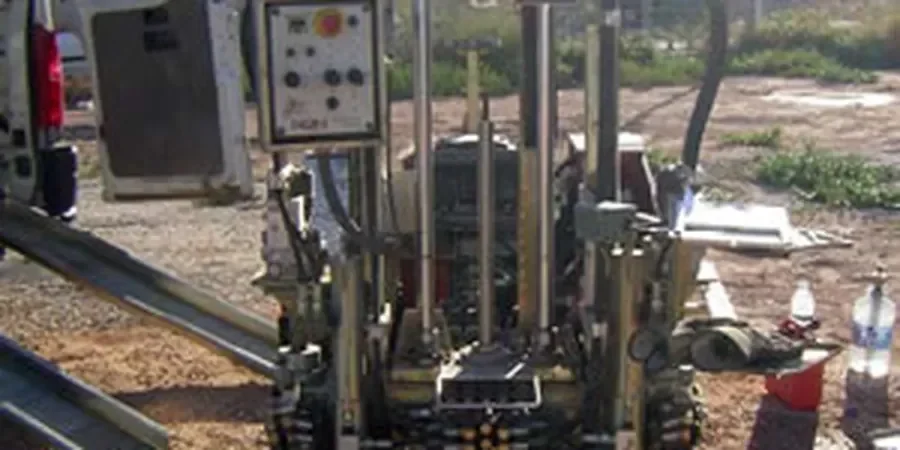
In Derby's variable drift geology, continuous CPT profiling eliminates the information gaps that discrete sampling methods leave behind.
Process overview
Local context
Derby's location in the Trent Valley means groundwater levels fluctuate seasonally by up to 2 m. In winter, high pore pressures in the laminated clays can cause rapid strength loss during excavation. A standard borehole log might miss the thin sand lenses that act as drainage paths. Running a CPT (Cone Penetration Test) during the wetter months gives a realistic picture of the effective stress conditions. We have seen cases where the undrained shear strength from a CPT was 30 % lower than laboratory tests on disturbed samples — a critical difference for retaining wall design. The continuous pore pressure trace from the piezocone identifies those permeable layers better than any other in-situ method.
Visual overview
Regulatory framework
BS EN 1997-1:2004 (Eurocode 7 – Geotechnical design), BS 5930:2015 (Code of practice for ground investigations), ISO 22476-1:2012 (Field testing – Electrical cone and piezocone penetration test)
Additional services
Standard Piezocone Penetration Test (CPTu)
Full push with continuous qc, fs and u2 recording. Includes dissipation tests at 1 m intervals to estimate in-situ horizontal permeability. Suitable for the laminated clays and tills common in Derby. Data delivered as digital logs and Soil Behaviour Type charts.
Seismic CPT (SCPT) for Shear Wave Velocity
Adds a geophone array to the cone string. Measures Vs at 1 m intervals to derive small-strain shear modulus (G0). Useful for seismic site classification and foundation stiffness assessment in Derby's deeper alluvial deposits.
Typical parameters
Questions and answers
How much does a CPT in Derby cost?
A standard CPT push to 15 m depth in Derby typically costs between £140 and £170 per metre. The final price depends on site access, number of dissipation tests and total depth. We deliver a fixed quote after a brief site review.
What is the difference between CPT and SPT for Derby soils?
The CPT gives continuous data every 2 cm, while the SPT returns a blow count every 1 m. In Derby's laminated clays, the CPT picks up thin sand and silt layers that the SPT misses entirely. The piezocone also measures pore pressure, which is critical for effective stress analysis in the Trent Valley alluvium.
Can CPT be performed in Derby's clay-filled solution features?
Yes, but with caution. The cone can penetrate through soft clay infill in karstic voids, but the reaction mass may punch into the ground if the feature is large. We pre-survey the site with a georradar GPR scan to identify voids before mobilising the CPT rig. This reduces the risk of losing the cone or causing surface instability.