Ground conditions in Derby shift noticeably between the city centre and outlying suburbs. Around the Cathedral Quarter you often find firm gravels over Mercia Mudstone – decent bearing for simple strip footings. Head toward Allestree or the Derwent floodplain and you hit soft alluvial clays and peat layers. That contrast forces us to adapt the shallow foundation design to each plot. In our track record a standard 1 m wide strip won't cut it on the alluvium. We combine walkover surveys with trial pits to map the variability. That early stage work saves weeks of delays later. A reliable shallow foundation design starts with understanding what lies beneath. For softer zones we often recommend a losa de cimentacion to spread loads evenly.
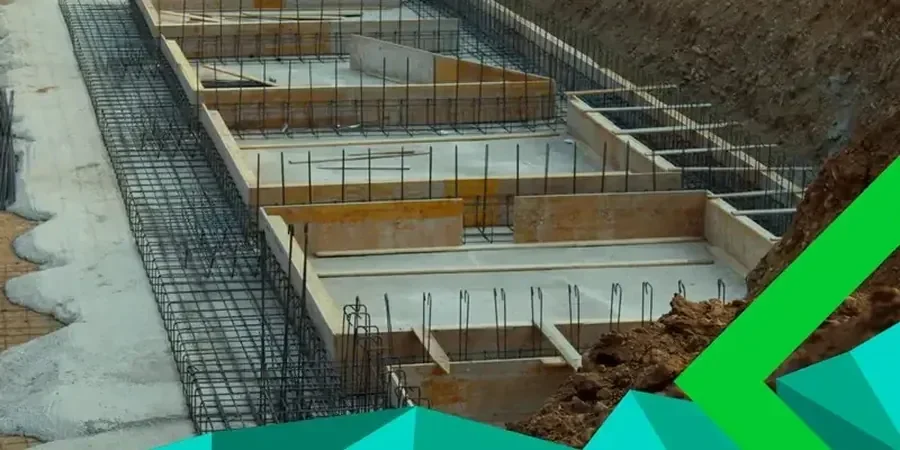
Mercia Mudstone weathers fast once exposed – we run triaxial tests within a week to keep foundation design data reliable.
Process overview
Local context
Derby sits on a mix of river terrace deposits and glacial till. The Derwent floodplain brings high groundwater in winter – that can soften excavation bases overnight if not drained. Clay shrinkage during dry summers is another risk. We have seen shallow foundations lose support after prolonged drought. The city's humid temperate climate means moisture cycles are aggressive. A solid shallow foundation design must account for seasonal water table changes. We always recommend a drainage layer and blinded hardcore to protect the formation. Ignoring these local patterns can lead to uneven settlement within two years of handover.
Visual overview
Regulatory framework
Eurocode 7 (BS EN 1997-1:2004), BS 5930:2015 – Code of practice for ground investigations, NHBC Standards Chapter 4.2 (build over areas), BRE Digest 365 – Soakaway design
Additional services
Site investigation & trial pitting
We dig trial pits across your plot to log soil strata visually and collect undisturbed samples. Derby's alluvial layers often hide thin peat bands that a borehole might miss. We map them precisely.
Bearing capacity verification
Using plate load tests and laboratory triaxial data, we confirm the design bearing pressure for your strip or pad foundation. This step avoids overdesign or underdesign on variable Mercia Mudstone.
Typical parameters
Questions and answers
What is the typical cost for a shallow foundation design study in Derby?
For a standard residential plot with one borehole and basic lab tests you can expect between £1.600 and £2.830. Larger or more complex sites with multiple trial pits push toward the upper end. We deliver a fixed quote after a quick site walkover.
How deep should a strip foundation be in Derby clay soils?
Minimum 0.9 m to avoid frost heave. On shrinkable clays we often go deeper – 1.2 m to 1.5 m – to reach stable moisture content. The exact depth depends on plasticity index and tree proximity.
Do I need a trial pit if I already have a borehole log?
Boreholes give continuous cores but can miss shallow weak layers like peat bands. Trial pits let you see the ground in plan and sample intact blocks. We recommend both for a solid shallow foundation design in Derby's variable alluvium.