In Derby we often find that the alluvial clays along the Derwent Valley behave quite differently from the glacial tills on the higher ground. That is why we run Atterberg limits on every clay sample before any foundation design begins. The liquid limit, plastic limit and plasticity index give us a reliable fingerprint of how the soil will respond to moisture changes. These parameters are especially important when you are dealing with the shrink-swell behaviour typical of many East Midlands clays. We also cross-check results with a clasificación de suelos to confirm the Unified Soil Classification, ensuring the data fits the wider geological picture.
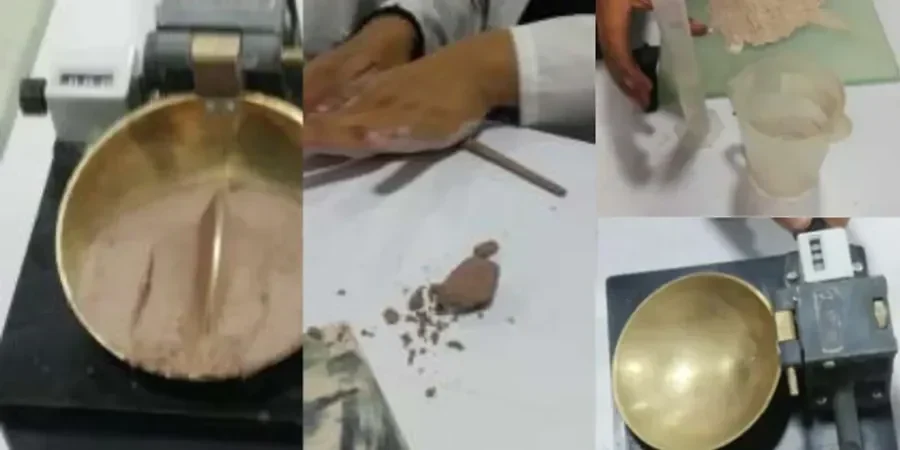
A plasticity index above 35 in Derby clay almost always indicates high shrink-swell potential that must be addressed in foundation design.
Process overview
- Liquid limit (cone method) – BS 1377-2:1990, clause 4.3
- Plastic limit and plasticity index – BS 1377-2:1990, clause 5
- Shrinkage limit on request (BS 1377-2:1990, clause 6)
Local context
One of the biggest risks we see in Derby is the difference between the soft alluvial clays near the city centre and the stiffer glacial tills in suburbs like Allestree or Oakwood. If you design based on data from one zone and build in the other, you can end up with differential settlement or heave. That is why we always run Atterberg limits on samples from every borehole, not just one per site. The plasticity index tells us instantly whether the clay is likely to shrink during dry spells or swell after heavy rain — both common scenarios in Derby's climate.
Regulatory framework
BS 1377-2:1990 – Methods of test for soils: classification tests, BS 5930:2015 – Code of practice for ground investigations, Eurocode 7 (EN 1997-2:2007) – Geotechnical design, ground investigation and testing
Additional services
Liquid Limit (Cone Penetrometer)
Determined using the 80 g cone with a 30° angle, following BS 1377-2:1990 clause 4.3. We record the moisture content at 20 mm penetration and plot the flow curve for the exact liquid limit value.
Plastic Limit & Plasticity Index
The plastic limit is measured by rolling 3 mm diameter threads until they crumble. The plasticity index is the arithmetic difference between LL and PL, and we classify the clay as low, medium, high or very high plasticity.
Shrinkage Limit & Linear Shrinkage
For clays that show high volume change potential — common in Derby's alluvial deposits — we measure the shrinkage limit using the mercury displacement method and report linear shrinkage as a percentage of the original length.
Typical parameters
Questions and answers
Why are Atterberg limits important for foundation design in Derby?
Derby's clay soils, especially the alluvial clays along the Derwent, can change volume significantly with moisture. The Atterberg limits give engineers the plasticity index, which directly correlates to shrink-swell potential. Without this data, foundations risk heave or settlement over seasonal cycles.
What is the difference between liquid limit and plastic limit?
The liquid limit is the moisture content at which soil changes from liquid to plastic behaviour — measured with a cone penetrometer. The plastic limit is the moisture content where soil becomes too dry to remain plastic and starts to crumble. The gap between them is the plasticity index, which classifies the clay's engineering behaviour.
How long does Atterberg limits testing take in your Derby lab?
We typically turn around Atterberg limits results within 3 to 5 working days from sample receipt. For urgent projects, we can prioritise and deliver in 48 hours. The natural drying stage for the liquid limit test is the main time constraint.
What is the typical cost for Atterberg limits testing in Derby?
The cost for a full set — liquid limit, plastic limit and plasticity index — ranges between £50 and £80 per sample. The price depends on whether you need the shrinkage limit as well and the total number of samples. We can deliver a fixed quote based on your project scope.