Derby sits on a mix of river terrace deposits and Mercia Mudstone, with a shallow water table in the Derwent valley that demands accurate infiltration measurements for sustainable drainage design. Our infiltration tests in Derby apply the Porchet method for shallow pits and the double-ring infiltrometer for surface-level assessment, both following BS 5930 site investigation procedures. These field measurements determine the soil's saturated hydraulic conductivity, which is critical for sizing soakaways, permeable pavements, and attenuation basins. The results feed directly into drainage calculations for planning approval, especially under Lead Local Flood Authority requirements. For deep drainage assessments we often complement with a drainage geotechnical study to correlate infiltration rates with soil stratigraphy and groundwater levels.
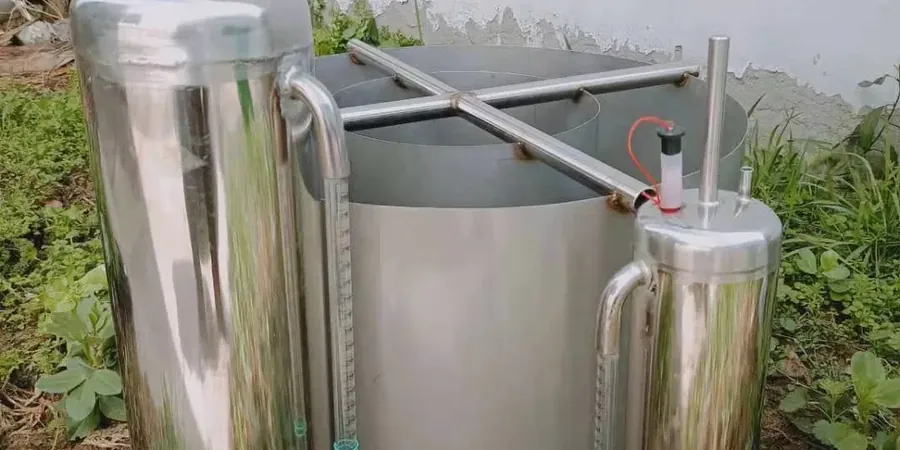
Infiltration rates on Derby's Mercia Mudstone can drop by half after wet winters; seasonal testing avoids costly soakaway overdesign.
Process overview
- Porchet test: 0.15–0.30 m borehole, constant head method, ideal for soakaway design
- Double-ring: 0.30 m inner ring, 0.55 m outer ring, measures field-saturated hydraulic conductivity
Local context
A housing development in Derby's Allestree area recently required redesign of its drainage network after initial infiltration tests showed rates of only 0.02 m/day instead of the assumed 0.15 m/day. The developer had skipped seasonally representative testing, relying on a single dry-weather reading. We have seen similar cases across the city where clay-rich till or compacted fill layers block percolation. If infiltration results are overestimated, soakaways fail within months, leading to surface flooding, structural damage to foundations, and enforcement action by the Environment Agency. The risk multiplies when multiple tests are not averaged — a single high outlier can mask a predominantly low-permeability site.
Regulatory framework
BS 5930:2015 Code of practice for site investigations, BRE Digest 365 Soakaway design, Eurocode 7 (BS EN 1997-2:2007) – Ground investigation and testing
Additional services
Porchet Infiltration Test
A cost-effective method for soakaway design in Derby. A 0.15–0.30 m borehole is augered to the proposed invert depth, filled with water, and the rate of fall is recorded. Three repeat runs establish steady-state Kfs. Ideal for residential and small commercial developments where access is limited and excavation is shallow.
Double-Ring Infiltrometer Test
Used for surface-level permeability assessment on permeable pavements, swales, and infiltration basins. The concentric rings isolate vertical flow, eliminating lateral error. We apply a constant head of 100 mm and record the inflow rate over 60–120 minutes. Suitable for large-scale SUDS design in Derby's new housing extensions.
Typical parameters
Questions and answers
What is the difference between the Porchet and double-ring infiltrometer methods?
The Porchet test uses a small borehole and measures vertical and lateral flow combined, which is appropriate for soakaway design where three-dimensional flow occurs. The double-ring infiltrometer isolates vertical flow by using an outer guard ring, providing a direct measurement of field-saturated hydraulic conductivity in the vertical direction. Both methods follow BS 5930 and BRE Digest 365, but the choice depends on the drainage feature being designed.
How many infiltration test locations are needed for a typical Derby development?
For a single residential plot, a minimum of three test locations is recommended to capture spatial variability. For larger developments, BRE Digest 365 suggests one test per 50 m² of drainage area, with at least three tests per soil type. In Derby's variable ground, where river terrace deposits and mudstone alternate, we often increase the density to one test per 30 m² to ensure representative results.
What is the typical cost range for an infiltration test in Derby?
A standard Porchet or double-ring infiltration test in Derby typically costs between £280 and £330 per location, including field execution, data analysis, and a summary report. The final price depends on site access, number of tests, and whether additional soil classification is required. We deliver a fixed quote after a brief site walkover.
Do infiltration rates in Derby change seasonally?
Yes, significantly. Derby's clay-rich soils, particularly the Mercia Mudstone, can show infiltration rates up to 50% lower after prolonged wet periods due to clay swelling and smearing. We strongly recommend conducting infiltration tests during the wettest part of the year (November to March) or performing a seasonal correction using the method described in BRE Digest 365. Tests done in summer drought conditions may overestimate the design rate by a factor of two or more.