Derby sits on a mix of river terrace gravels and Mercia Mudstone, so retaining walls here face both drainage demands and variable bearing capacity. The city's history of coal mining adds another layer – old workings can cause uneven settlement behind a new wall. We design to Eurocode 7, factoring in lateral earth pressures and groundwater levels. For walls on softer ground, we often combine our retaining wall design with a study of soil classification to pick the right backfill material. Every Derby project starts with a site investigation – no two plots behave the same.
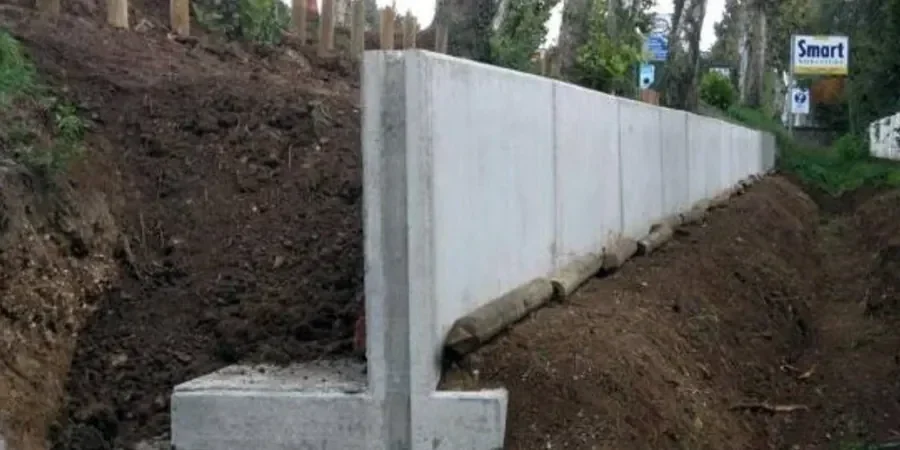
Derby's variable ground conditions – from river gravels to mudstone – mean every retaining wall design needs a site-specific soil investigation and drainage plan.
Process overview
Local context
In Derby, the biggest risk is ignoring groundwater. A wall without proper drainage can build up hydrostatic pressure, leading to rotation or collapse. The clay layers in the Mercia Mudstone can also soften when exposed, reducing passive resistance at the toe. We've seen cases where a wall designed for drained conditions failed because the weep holes blocked. That's why we specify a continuous drainage layer and a filter fabric. Our retaining wall design always includes a sensitivity check for water level rise – especially near the Derwent floodplain. We also verify the bearing capacity of the founding soil, because mudstone strength drops with weathering.
Regulatory framework
BS EN 1997-1:2004 (Eurocode 7 – Geotechnical design), BS 6031:2009 (Code of practice for earthworks), CIRIA C580 – Embedded retaining walls
Additional services
Site Investigation & Soil Testing
Boreholes, trial pits, and laboratory tests to classify the ground and measure shear strength. We also install piezometers to track water levels.
Structural & Geotechnical Design
We produce calculations for sliding, overturning, bearing, and global stability. Output includes reinforcement schedules and construction drawings.
Drainage & Waterproofing Advice
We design drainage blankets, weep holes, and waterproof membranes. This protects the wall and prevents water damage to the retained soil.
Typical parameters
Questions and answers
How much does retaining wall design cost in Derby?
For a typical residential wall (2–4 m high), design fees range from £730 to £3,030, depending on site complexity, ground conditions, and the need for drainage design. Commercial projects with higher surcharges cost more.
What ground conditions affect retaining wall design in Derby?
Derby has river terrace gravels near the Derwent and Mercia Mudstone on higher ground. The mudstone can be strong when fresh, but weathers quickly if exposed. Coal mine workings also exist – we check for shallow voids that could cause settlement behind the wall.
Do I need planning permission for a retaining wall in Derby?
If your wall is over 1 m high and next to a highway, or over 2 m elsewhere, you usually need planning permission. Derby City Council may also require a structural design signed by a chartered engineer. We can deliver the calculations and drawings.
What is the difference between a gravity wall and a cantilever wall?
A gravity wall relies on its own weight to resist overturning – it's thick and uses mass concrete or stone. A cantilever wall uses a slender stem and a base slab, with reinforcement to handle bending. Cantilever walls are cheaper for heights above 3 m and need less footprint.